


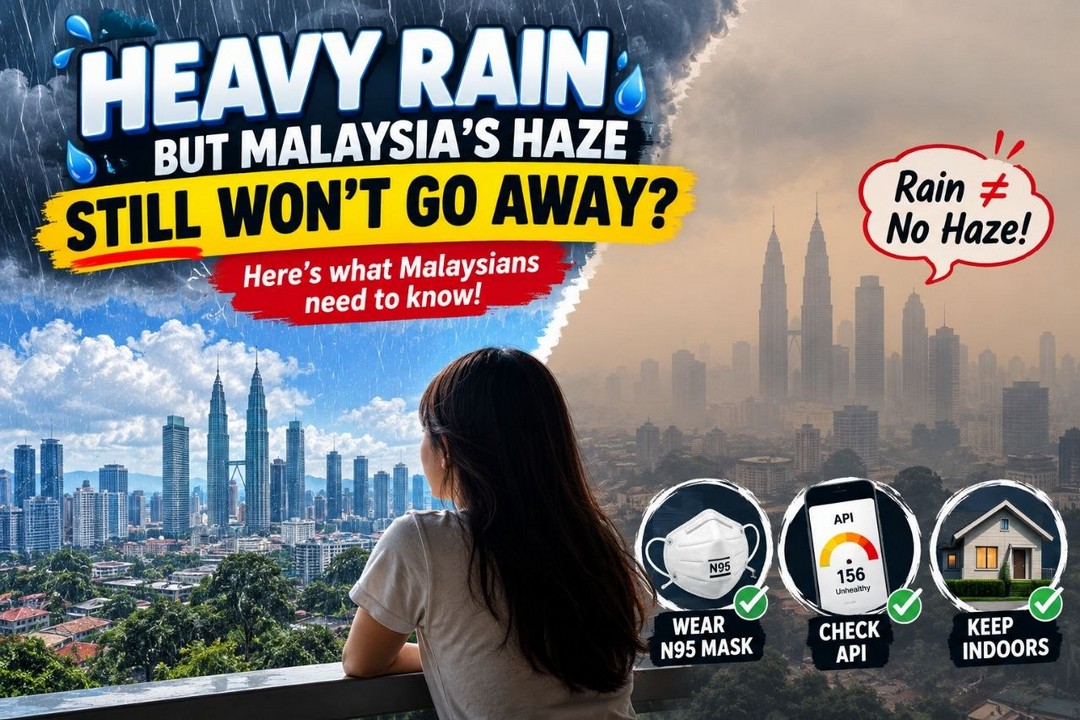
Heavy Rain, Yet Malaysia’s Haze Remains? Here Are 7 Ways to Protect Yourself
Have you ever looked outside after a heavy downpour, expecting the air to feel fresh and clean, only to find that the sky still looks hazy? It can be confusing, especially when the rain has been falling heavily for hours. Surely, all that rain should have washed away the pollution, right?
Unfortunately, it is not that simple.
Although rainfall can help remove certain pollutants from the atmosphere, it does not guarantee that the air is clean or safe to breathe. Fine airborne particles can remain suspended in the air, while winds may carry smoke and haze from other areas into Malaysia.
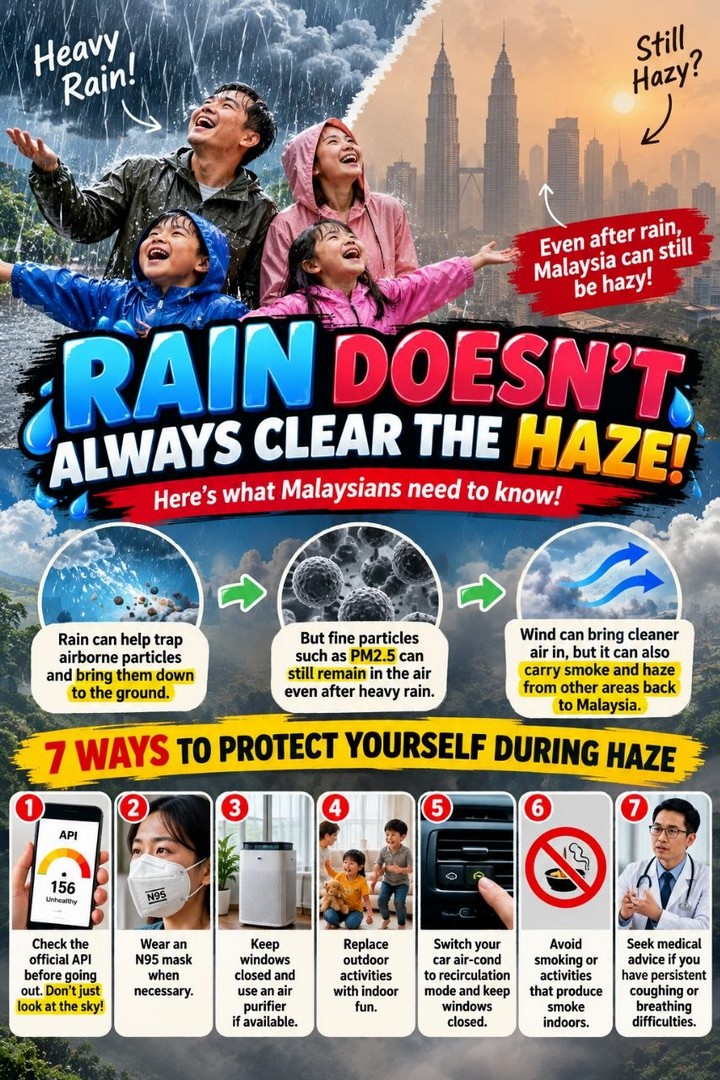
As highlighted in a report by SAYS, rain can capture airborne particles and bring them to the ground through a process known as wet scavenging. However, smaller particles, including PM2.5, may still be present even after a thunderstorm.
This means that a clearer-looking sky does not necessarily indicate better air quality. If you are planning to exercise outdoors, take your children to the playground or spend time outside after the rain, it is worth checking the latest air quality readings first.
The good news is that there are practical steps Malaysians can take to reduce their exposure to haze. Here are seven useful tips to help protect yourself and your family when air quality becomes a concern.
1. Check the API Before Heading Outdoors
One of the easiest mistakes to make during haze season is judging air quality by appearance alone. The sky may look relatively clear, but harmful particles can still be present in the atmosphere.
Instead of relying on what you see, check Malaysia’s Air Pollutant Index (API), which provides information about air pollution levels in different areas.
The Department of Environment Malaysia provides official air quality readings through its online portal:
Official API website: https://eqms.doe.gov.my/apims/main
Make it a habit to check the readings before going for a morning jog, cycling around your neighbourhood or taking your children out for outdoor activities. This is particularly important when haze has been reported in nearby areas.
Air quality can change throughout the day, so checking the latest available readings is more useful than assuming conditions remain the same after rainfall.
2. Consider Wearing a Properly Fitted N95 Respirator
Sometimes, going outdoors is unavoidable. You may need to travel to work, buy groceries, collect your children from school or attend an important appointment.
When haze is present, a properly fitted N95 respirator can help filter fine airborne particles, including PM2.5. However, it needs to fit closely around your face to provide the intended protection.
Ordinary surgical masks generally do not provide the same level of protection against fine particles because they may allow polluted air to enter through gaps around the edges.
Keep in mind that an N95 respirator does not eliminate every risk associated with air pollution. People with existing heart or lung conditions should follow medical advice and limit exposure when air quality deteriorates.
If you must travel during hazy conditions, wearing appropriate respiratory protection can be one useful precaution alongside reducing the time you spend outdoors.
3. Keep Your Windows Closed When Haze Becomes Severe
Your home should be a place where you can escape polluted outdoor air as much as possible. However, haze can enter through open windows, doors and other gaps, affecting the air you breathe indoors.
When outdoor air quality becomes unhealthy, keep windows and doors closed where practical. If you have an air purifier equipped with a suitable HEPA filter, consider running it in the room where your family spends the most time.
Choose an appropriately sized purifier for the room and follow the manufacturer’s maintenance instructions to keep it working effectively.
It is also worth remembering that indoor air quality can deteriorate if ventilation is poor and pollution-producing activities continue inside. The aim is to reduce the amount of outdoor pollution entering your home without introducing additional pollutants indoors.
For families with young children, elderly relatives or people who have respiratory conditions, taking these precautions can be particularly important during periods of severe haze.
4. Replace Outdoor Exercise with Indoor Activities
A little rain might make the weather cooler and more comfortable, but that does not automatically make it a good time for outdoor exercise.
Activities such as jogging, cycling, hiking and playing football can increase your breathing rate. When the air contains elevated levels of pollution, this may increase the amount of pollutants you inhale.
If API readings indicate unhealthy air quality, consider postponing strenuous outdoor activities until conditions improve. You could exercise indoors, follow a home workout video, stretch in your living room or visit an indoor facility with suitable air quality.
Parents should also pay attention to children’s outdoor playtime, particularly when haze levels are elevated. Older adults and people with heart or lung conditions should take additional precautions.
There is no need to abandon your fitness routine altogether. Adjusting your plans according to air quality can help you stay active while reducing unnecessary exposure.
5. Use Your Car’s Air-Recirculation Setting
If you need to drive during hazy weather, a few simple adjustments can help reduce the amount of polluted outdoor air entering your vehicle.
Keep the windows closed and switch the air-conditioning system to recirculation mode when appropriate. This setting recirculates air inside the cabin rather than continuously drawing in air from outside.
However, recirculation is not a complete solution. Your vehicle’s cabin filter, its condition and the effectiveness of the ventilation system can all affect the air inside the car.
Check your vehicle’s maintenance schedule and replace the cabin air filter when necessary. Avoid assuming that the air inside your car is completely free from pollution simply because the windows are closed.
If the haze is particularly severe, limit unnecessary journeys where possible. Combining errands into one trip can also reduce the time you spend travelling through polluted areas.
6. Keep Your Indoor Air as Clean as Possible
Closing the windows is only one part of protecting your household. Smoke and other pollutants can also come from activities inside your home.
Avoid smoking indoors, burning rubbish or using practices that produce unnecessary smoke. Be mindful when cooking, particularly if your kitchen has limited ventilation, and use appropriate extraction where available.
If you own an air purifier, keep its filters clean or replace them according to the manufacturer’s recommendations. A HEPA filter can help capture airborne particles, although the purifier’s effectiveness depends on its design, room size and usage.
Try to keep indoor activities that generate smoke or particles to a minimum during periods when outdoor air is already polluted.
These small changes can make your home environment more comfortable and help reduce additional sources of airborne pollution. They are useful habits not only during haze season but also throughout the year.
7. Do Not Ignore Persistent Coughing or Breathing Problems
Haze can irritate the eyes, nose, throat and respiratory system. Some people may experience coughing, throat discomfort, wheezing, shortness of breath or chest tightness when exposed to polluted air.
If you notice these symptoms, reduce your exposure by moving to a cleaner indoor environment and avoiding strenuous activities. Seek medical advice if symptoms persist, worsen or interfere with your daily activities.
People with asthma or other existing respiratory conditions should follow their healthcare professional’s instructions and keep prescribed medication available as advised.
Do not ignore severe symptoms. Seek emergency medical attention if you experience serious breathing difficulties or chest pain.
Everyone can be affected by air pollution, but children, older adults, pregnant people and individuals with existing heart or lung conditions may require particular care.
Paying attention to how you feel, alongside checking official air quality information, can help you make safer decisions during hazy conditions.
Understanding Malaysia’s Air Pollutant Index
Malaysia’s API readings help the public understand how polluted the air is and whether additional precautions may be necessary.
The commonly used API categories are:
- API 0–50: Good
- API 51–100: Moderate
- API 101–200: Unhealthy
- API 201–300: Very unhealthy
- API above 300: Hazardous
As readings rise, reducing exposure becomes increasingly important. Follow the latest guidance from Malaysian authorities, particularly when readings reach unhealthy levels or higher.
Remember that the API is a more useful guide than the appearance of the sky. Rainfall, wind direction, nearby fires and other pollution sources can all influence air quality, meaning conditions may differ between locations.
Why Malaysians Should Take Haze Precautions Seriously
It is tempting to assume that a heavy downpour has solved the haze problem, especially when the weather becomes cooler and visibility improves. However, rainfall does not necessarily remove all harmful particles, and pollution can return or persist depending on atmospheric conditions.
Taking a few minutes to check the API, adjusting your outdoor plans and keeping indoor air as clean as possible are practical ways to protect yourself and your loved ones.
These precautions do not have to be complicated or expensive. Sometimes, the most useful decision is simply to postpone an outdoor workout, close the windows or avoid an unnecessary journey until conditions improve.
The next time Malaysia experiences heavy rain followed by lingering haze, do not rely on the weather alone to decide whether it is safe to head outside. Check the official readings and make your plans accordingly.
After all, protecting your health is more important than squeezing in a quick jog or taking a casual walk when the air quality is poor.
How is the air quality in your area? Have you noticed that the haze remains even after heavy rain? Share your experience in the comments and pass this article to your family and friends so they can learn how to take precautions too.
For the latest conditions, consult the Department of Environment Malaysia’s official air quality portal and follow advice from the relevant authorities. This article is for general information only and does not replace professional medical advice.
Promotional/Event Details
Date: From 16 October 2026 onwards; relevant whenever haze affects Malaysia
Time: Check the latest available API readings before outdoor activities; air quality conditions may change throughout the day.
Venue: Nationwide, Malaysia
Official Information: https://eqms.doe.gov.my/apims/main
Merchant or Brand: Department of Environment Malaysia
Category: Public Health Awareness / Haze Safety Information

EverydayOnSales help brands connect with our community, the largest warehouse sales consumers database in Malaysia. Advertise with EverydayOnSales Malaysia.